
Latest Stories
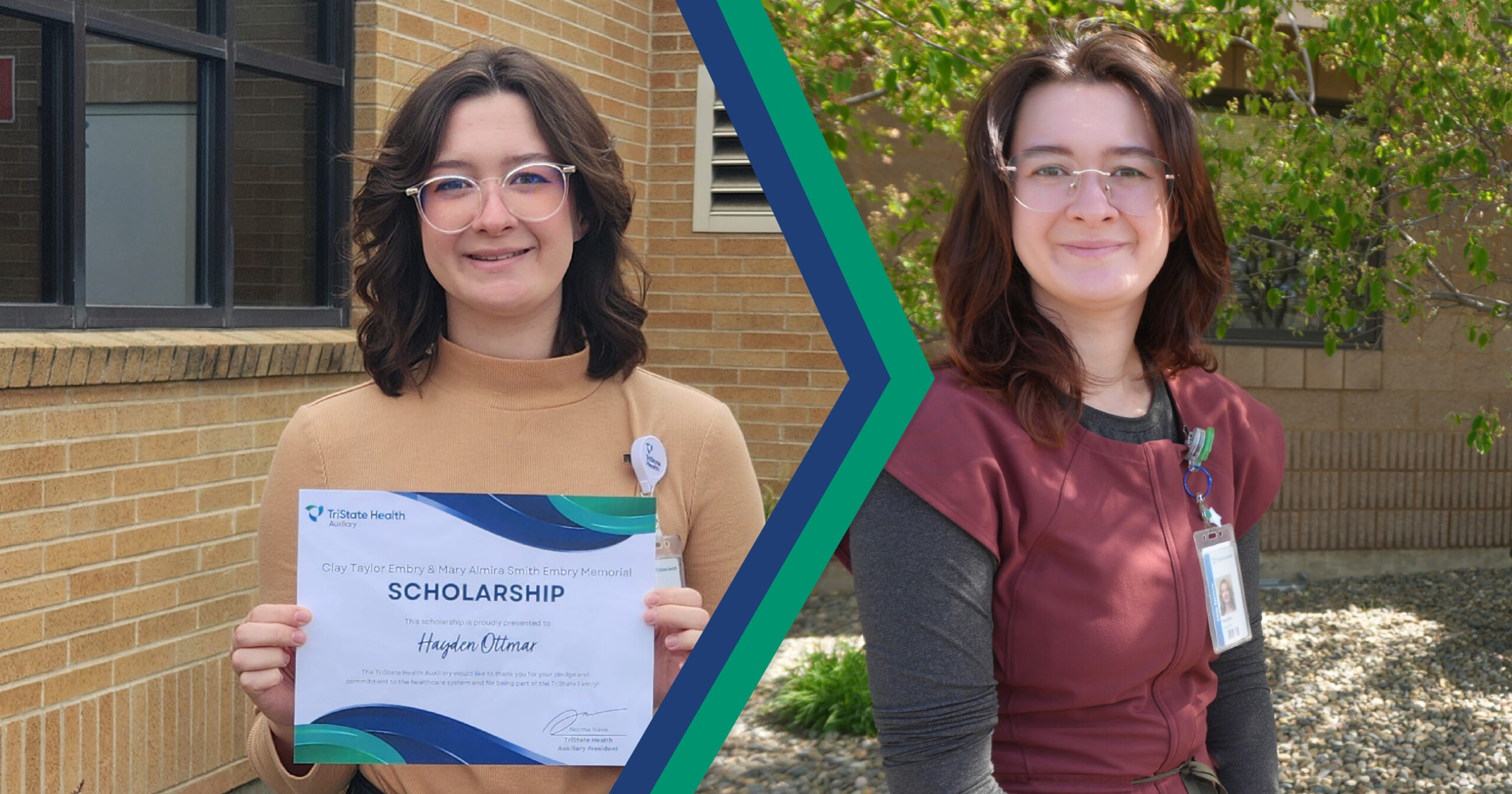
From Scholarship To Service | A Full-Circle Nursing Journey
Share
For TriState Health nurse Hayden Ottmar, a career in healthcare was never just a job. It was a calling shaped by family, community, and a desire to make a difference.
“I always kind of knew I wanted to be a nurse,” Hayden shared. “Even back in high school, I was drawn to healthcare.” That interest was reinforced early on through volunteer experiences alongside her mother at a local hospital in Spokane, where she first saw the impact compassionate care can have on patients and families.
Though her path included some exploration, considering roles like paramedic before ultimately returning to nursing, one thing remained constant: she wanted hands-on work that kept her connected to people. “I couldn’t see myself in an office setting,” Hayden said. “I needed something more active, something where I could really engage with others.”
After beginning her education at Lewis-Clark State College and later transferring to Walla Walla Community College, Hayden graduated from nursing school in 2024. Like many students, the journey came with unexpected financial challenges that go far beyond tuition.
That’s where the TriState Health Scholarships made a meaningful difference. While attending nursing school, Hayden received both the Clay Taylor Embry & Mary Almira Smith Embry Memorial Scholarship from the TriState Health Auxiliary, and the TriState Health Scholarship that was created by TriState Health Foundation and Dr. E. Wayne & Vivian Day.
“Nursing school is expensive in ways people don’t always realize,” Hayden explained. “There are textbooks, lab fees, insurance, scrubs, shoes, and equipment like stethoscopes, which can be hundreds of dollars.” The scholarship helped ease that burden, allowing her to focus more fully on her education. “It took away a lot of that financial stress and helped me get the tools I needed to succeed.”
Hayden’s connection with TriState Health ran deeper than financial support. With multiple family members working within the organization, she was already familiar with its culture, but it was her clinical experiences as a student that truly solidified her decision to stay.
“TriState was just always very welcoming,” Hayden said. “They were open to teaching and gave students opportunities to really learn and try things. That’s not always the case everywhere.”
After graduation, Hayden chose to begin her career through TriState’s Nurse Residency Program, a decision she now considers invaluable. “When you don’t go through a residency, you are kind of thrown straight into it,” she said. “The residency gives you that extra support and helps ease the transition from student to nurse.” Through the program, she rotated between departments like Medical-Surgical and Intensive Care Units, gaining exposure to different specialties while building confidence in her skills.
Just as important, she found a sense of community. “It’s like a safe space. You can talk about your experiences, good or bad, and learn from them. They also teach you how to avoid burnout, which is huge in this field.”
That foundation prepared Hayden for her first role on the medical-surgical floor, where she spent about a year caring for patients during some of their most vulnerable moments.
Later, she transitioned into a clinic setting, and today, Hayden serves as a float nurse, working across multiple departments. The variety keeps her engaged and continuously learning. “Each department is a little different, so you have to adapt,” she explained. “Some are more fast-paced and hands-on, while others are more routine. I enjoy being able to experience all of it.”
Hayden’s unique journey, from student to scholarship recipient, residency participant, and now float nurse, offers a full picture of workforce development in action at TriState Health. It also gives her a rare perspective on the patient experience, especially when she sees individuals she once cared for in the hospital return for follow-up visits in much better health.
“You see them at their lowest point when they’re in the hospital,” Hayden said. “So when you see them later, doing well, it’s just incredible.”
Those moments serve as powerful reminders of the impact nurses have, not just during a hospital stay, but throughout a patient’s entire journey to recovery.
Hayden also finds meaning in the relationships built through local care, something she believes sets TriState apart. “In a smaller community, you really get to know your patients,” she said. “You see them more than once, sometimes in different settings, and you remember their stories. That connection matters.”
Whether it’s recalling a patient’s interest in gardening or simply taking time to talk beyond their diagnosis, those small interactions can have a big impact. “They just light up when you remember something about them. It shows you’re really listening.”
For those considering a career in healthcare or thinking about applying for a TriState Health Scholarship, Hayden’s advice is simple. “It’s worth it,” she said. “The support you get, both financially and professionally, makes a huge difference. And TriState Health is the kind of place where you want to stay.”
From scholarship support to hands-on training and a strong sense of community, Hayden’s story is a testament to what becomes possible when TriState Health and the community invest in the next generation of caregivers.
Invest in the next generation of compassionate caregivers! Each donation ensures that talented, dedicated individuals have the opportunity to serve patients and families right here at home.
To donate to the TriState Healthcare Scholarship Fund, visit TSH.org/WaysToGive